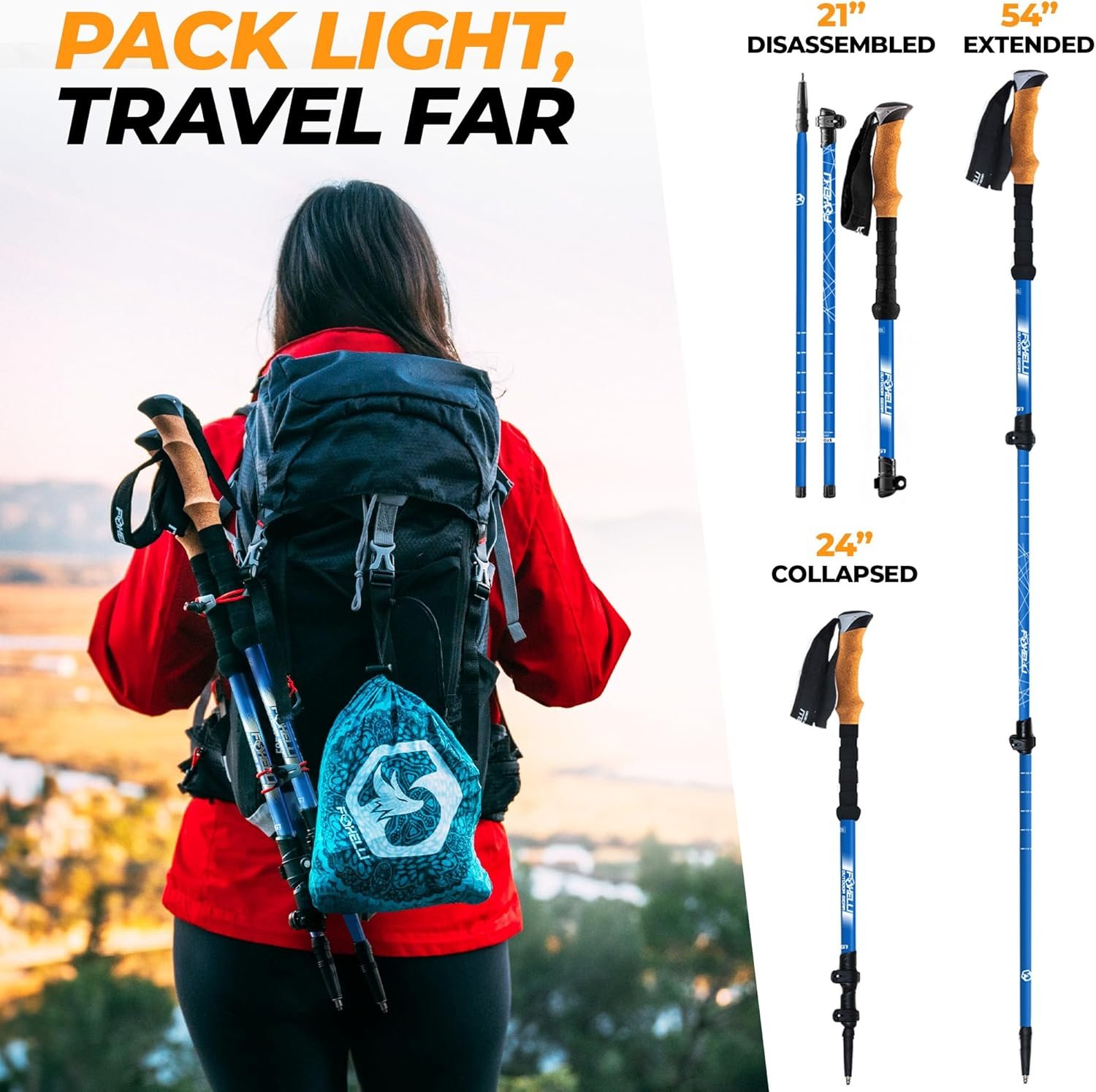
Foxelli Carbon Fiber Trekking Poles review
? Want to know if the Foxelli Carbon Fiber Trekking Poles – Lightweight Collapsible Hiking Poles with Cork Grips, Lever Locks & All Terrain Accessories are the right choice for your next hike?

Quick summary of the Foxelli Carbon Fiber Trekking Poles
You’ll find a concise snapshot of what these poles offer before reading the deeper sections. This gives you a fast sense of whether they fit your needs without skipping the detailed review below.
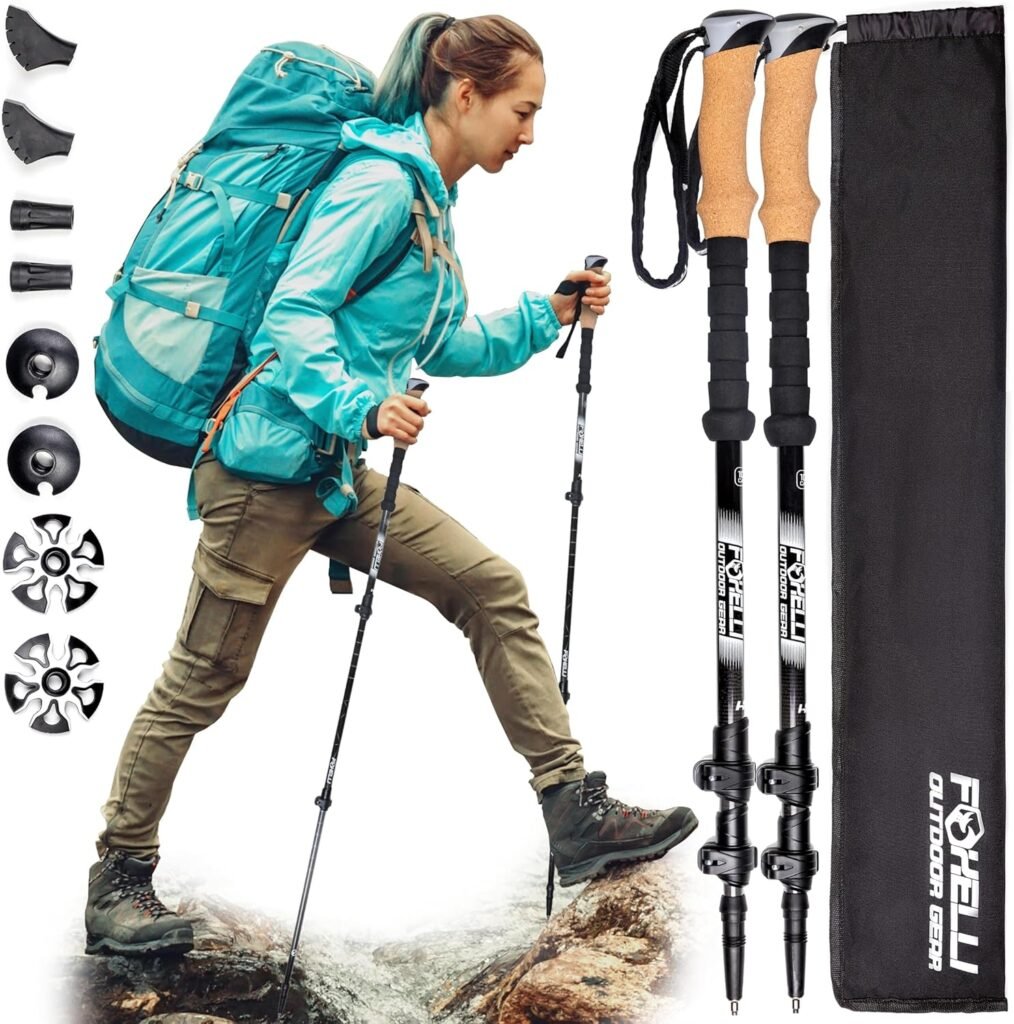
These poles are built from 100% carbon fiber and weigh just 7.6 oz per pole, making them a strong option if you want lightweight gear. They fold compactly, use lever locks for quick adjustment, and include cork grips, EVA foam sleeves, tungsten carbide tips, and several accessories for varied terrain.
Key specifications at a glance
A quick table helps you compare essential facts at a glance so you can decide if you should keep reading. You’ll get the main specs, adjustability, and included accessories in one place.
| Feature | Specification |
|---|---|
| Material | 100% Carbon Fiber |
| Weight | 7.6 oz (per pole) |
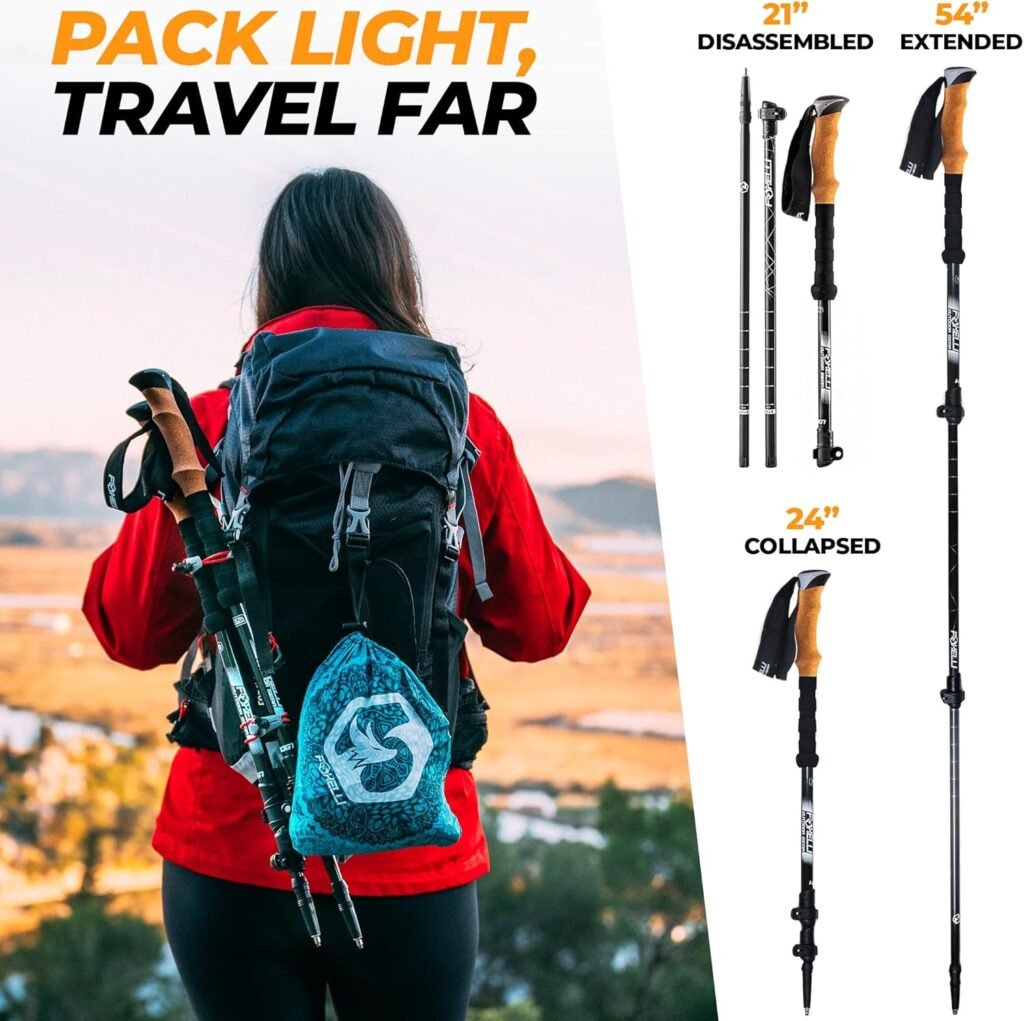
| Length Range | 24″ – 54″ (adjustable) |
| Grip | Cork with extended EVA foam sleeve |
| Locks | Lever locks (adjustable, load-bearing) |
| Tips | Tungsten carbide tips (all-terrain) |
| Accessories Included | Mud baskets, snow baskets, rubber tips, carrying case, clip |
| Folded Length | Compact/folds down for backpack storage |
| Wrist Straps | Padded and adjustable |
| Intended Use | Hiking, backpacking, walking, mountaineering, travel |
Build quality and materials
You’ll notice the moment you hold them that these poles feel premium and lightweight. The carbon fiber construction gives you strength without dragging you down on long hikes.
The carbon fiber tubes are rigid enough to support load-bearing use but still remain light. Seams and joints on the folding sections are generally clean and tight. The lever locks are metal and feel robust, which is important since slipping is a common complaint with lower-quality poles.
Carbon fiber advantages
You’ll want to understand why carbon fiber matters for trekking poles and how it affects your experience. It’s not just about weight — it’s about overall performance.
Carbon fiber is lighter than aluminum and tends to transmit less vibration back into your hands, which can reduce fatigue and joint stress. That said, carbon fiber can be more brittle than aluminum under extreme bending forces, so you should avoid using them as crutches or for heavy prying.
Construction and tolerances
You’ll see careful attention to the tolerances on the telescoping sections, which helps keep the pole straight under load. This consistency matters if you use the poles for long-distance hikes.
The lever locks clamp down securely and are designed for repeated adjustment. The joints fold compactly and fit together smoothly, making it easier to deploy and re-stow the poles multiple times during a day.
Weight and portability
You’ll quickly appreciate how much easier a 7.6 oz pole per side makes a long day on the trail. Less weight adds up over miles, so you’ll feel the benefit in your shoulders and back.
The folded length is suitable for most packs, and the poles collapse down into a compact size that you can stash in or attach to your backpack. You’ll like the included carrying case especially if you travel with your poles on flights or public transport.
Travel friendliness
You’ll find these poles especially useful if you travel because they fold down compactly and meet most airline carry rules when stowed in a case. They’re also lightweight enough to carry across city streets or to trailheads without fatigue.
The included carrying case and clip make it simple to store them in a suitcase or attach them outside your pack. That makes them convenient for multi-modal trips that mix planes, buses, and hikes.
Grip comfort and ergonomics
You’ll notice the cork grips feel comfortable even during sweaty or long efforts. Cork molds subtly to your hands over time and reduces hot spots, which helps prevent blisters and hand soreness.
The extended EVA foam sleeves let you change your grip position during steep climbs, giving you more control. Combined with padded, adjustable wrist straps, the grip system reduces hand fatigue on long descents or technical sections.
Cork vs foam grips
You’ll appreciate that cork absorbs sweat and molds to your hand, while the EVA foam on the lower section gives you versatility for short or long grips. This combination is often preferred by serious hikers.
Cork also has natural antimicrobial properties, which helps with odor control on multi-day trips. If you prefer an all-foam grip, these poles still give you a comfortable foam section for lower-hand positions.
Wrist straps and comfort features
You’ll find the wrist straps padded and adjustable, which helps keep the poles secure and reduces grip force. That’s useful when you need to plant and push repeatedly.
The padded straps help reduce abrasion and the chance of chafing during extended use. You can loosen the strap for quick-release motion or tighten it to offload some weight from your hands to your wrists and forearms.
Adjustability and locking mechanism
You’ll be able to change the height quickly thanks to lever locks that are easy to open and close. The 24″–54″ range gives you great flexibility for different terrains and user heights.
The lever locks are designed to be load-bearing and not slip under pressure, which is an advantage over twist-lock poles that can loosen over time. You’ll notice they hold firm after you secure them, even when leaning on the poles heavily.
Lever lock performance
You’ll like how quickly you can set these poles up and modify the length mid-hike. The levers have good leverage and clamp down solidly.
Make sure to keep the locking surfaces clean of dirt or grit; that helps maintain a secure grip and prevents premature wear. If you tighten too roughly, you don’t need to overdo it—the levers are designed to clamp reliably without enormous force.
Length range and use cases
You’ll appreciate the broad length range since it suits different users and conditions. Shorten them for steep climbs and lengthen for fast walking or downhill support.
Kids and shorter adults can use them at the low end, while taller hikers and those who need more reach can push toward the extended range. The broad adjustability also pairs well with changes in terrain and pack weight.
Tips, baskets, and accessories
You’ll get a set of accessories that make the poles versatile across seasons, including snow baskets, mud baskets, rubber tips, and a carrying case. Tungsten carbide tips provide excellent bite on hard surfaces.
The accessories are easy to swap without tools, letting you configure for hiking, snow, or pavement. The inclusion of a clip and case helps keep the poles protected when not in use.
Tungsten carbide tips
You’ll notice these tips grip better on rock and ice than softer materials. That improves confidence when you’re on slick or steep terrain.
The carbide pins last longer than steel tips and maintain traction. Still, you’ll want to use the rubber tips on paved or delicate surfaces to protect both the tip and the surface.
Baskets for mud and snow
You’ll find the mud and snow baskets easy to put on and take off, and they help prevent the poles from sinking too deep in soft ground or snow. That stabilizes your stride in variable conditions.
Swap baskets quickly before a snowy pass or muddy trail section. The included set covers most common conditions, but you can buy larger or specialized baskets if you regularly tackle deep snow or soft volcanic sand.

Performance across terrain
You’ll see these poles perform effectively on a wide range of terrain—well packed trails, rocky ridgelines, muddy ascents, and even snowy passes. Their lightweight construction favors long mileage, while the tips and baskets enhance traction.
They aren’t designed for heavy prying or extreme ski-mountaineering where you need aggressive bend resistance, but for typical hiking and backpacking, they’re versatile and dependable.
Trail walking and day hikes
You’ll feel immediate benefits on day hikes: less fatigue, steadier footing, and easier river crossings. The poles help maintain balance and reduce joint impact.
For day hikers who alternate between walking and scrambling, the compact fold and quick-lock system streamline transitions so you’re not fiddling with gear when the trail gets technical.
Backcountry and backpacking use
You’ll find them light enough to carry on multi-day trips where every ounce matters. The strength-to-weight ratio of carbon fiber helps when you’re covering long distances with a loaded pack.
Use them for setting up tarps or as temporary supports in a pinch—just don’t rely on them for heavy load-bearing tasks beyond their intended use.
Snow, ice, and technical terrain
You’ll appreciate the tungsten carbide tips on icy or hard-packed snow. The poles’ accessories include snow baskets that prevent plunge-through, improving confidence on tricky surfaces.
For steep ice climbing you’ll still want specialized ice axes or technical poles, but for ski touring and general snow travel, these poles are capable and reliable.
Durability and long-term reliability
You’ll need to treat carbon fiber poles with a bit more respect than aluminum ones to avoid catastrophic fractures. With sensible use, these poles will hold up through seasons of hiking.
The lever locks are durable and the cork grips age gracefully. Replaceable tips extend their lifespan, and the folding joints are built to keep functioning with routine care.
Common wear points and how to manage them
You’ll find the tips wear first, followed by potential scuffs on the shafts. Keep grit out of the lever locks and clean the joints after muddy trips to prevent premature wear.
If a tip wears down significantly, you can replace it to extend pole life. Avoid using them to lever rocks or as a pry bar to prevent stress fractures.
Warranty and serviceability
You’ll want to check the current warranty on purchase, but in general, Foxelli supports their products and can supply replacement parts for common items like tips and baskets. Keeping original receipts and registering the product will help if you need customer service.
Setup, folding, and packing
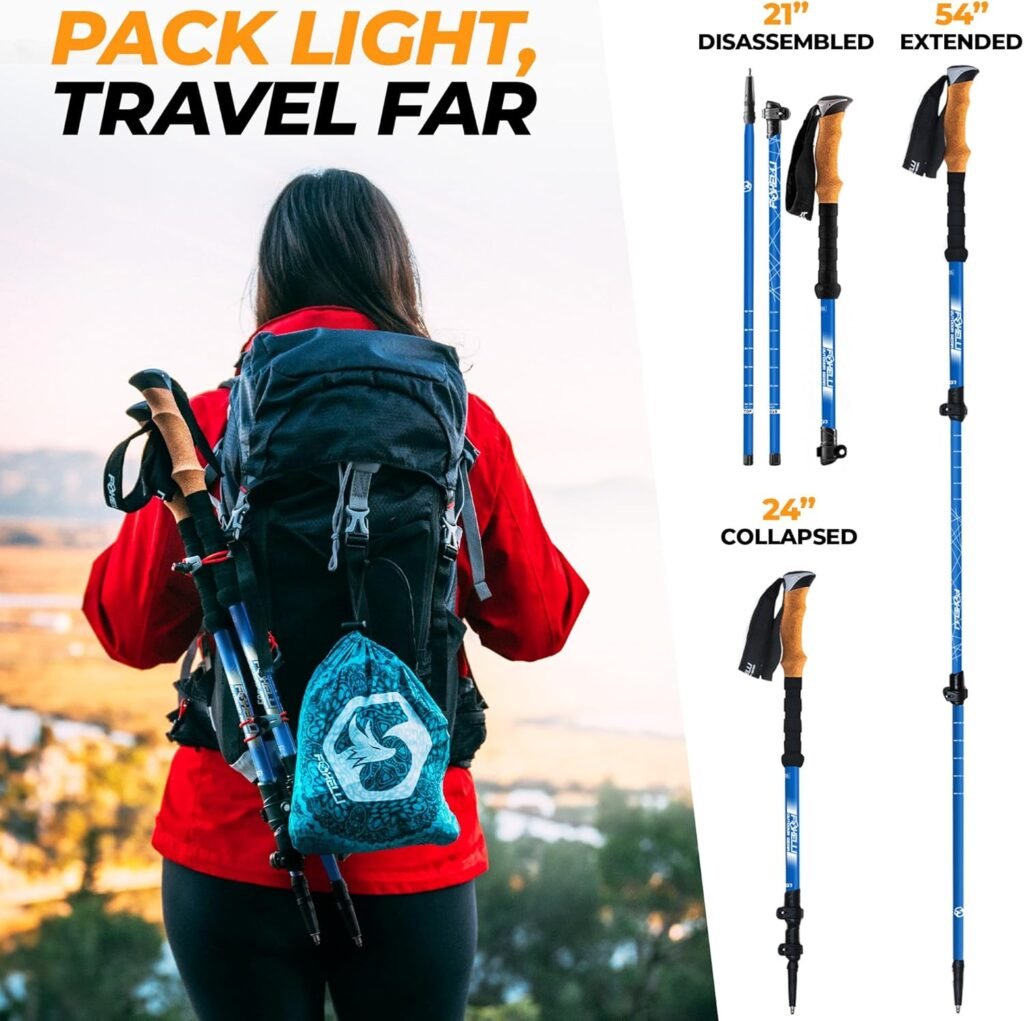
You’ll be in and out of setup quickly thanks to the fold and lever-lock design. Folding them down and storing them in the included case is straightforward, which saves you time at trailheads.
The poles snap into their compact form and the case protects the tips and reduces the chance of snagging other gear in your pack.
Folding mechanism and assembly
You’ll fold and unfold by releasing the lever locks, collapsing the sections, and securing them for storage. The sections align easily, and reassembly is intuitive even with gloves on.
Make a habit of stowing the poles clipped together or in the case to protect the cork grips and prevent accidental damage to other items in your pack.
Storage tips
You’ll want to dry the poles before storing them for long periods to prevent any moisture buildup in the joints. Keep the case in a cool, dry place to protect the cork and foam over time.
Avoid leaving them compressed under heavy loads for extended periods, as that can stress the folding joints.
Who should buy the Foxelli Carbon Fiber Trekking Poles?
You’ll find these poles ideal if you value a lightweight setup for day hikes, fastpacking, or multi-day backpacking trips. They’re a good match for hikers who want performance without the weight penalty of thicker aluminum poles.
They’re also a solid choice for travelers who need compact gear that fits in a suitcase or pack without much fuss. If you’re someone who beats up gear in technical climbing or uses poles for heavy utility work, you might prefer a reinforced aluminum model instead.
Ideal user profiles
You’ll appreciate these poles if you’re into long-distance hiking, travel hiking, or are sensitive to joint strain. They’re also suitable for casual users who want reliable support for family hikes and trips.
If you’re an ultralight enthusiast, these might be slightly heavier than the minimal carbon options, but they balance weight and sturdiness well for most users.
When to choose a different model
You’ll consider other options if you need poles for ice tool replacement, heavy mountaineering, or if you plan to use them as primary supports beyond walking and hiking. For extreme bashing or prying, aluminum poles are more forgiving.
Also, if you need a pole that extends beyond 54″ for specific uses, check models with greater reach.
Pros and cons
You’ll want a clear list of benefits and limitations to weigh this purchase against alternatives. Below are the most common advantages and potential drawbacks based on usage and build.
Pros
- Extremely lightweight at 7.6 oz per pole, reducing fatigue on long hikes.
- 100% carbon fiber construction for high strength-to-weight ratio.
- Comfortable cork grips with extended EVA foam for multiple hand positions.
- Secure, easy-to-use lever locks that hold under load.
- Wide adjustability from 24″ to 54″, suitable for many users and conditions.
- Tungsten carbide tips and multiple baskets included for varied terrain.
- Compact folding length and included carrying case for travel convenience.
Cons
- Carbon fiber can be more brittle than aluminum if used improperly.
- Not intended for heavy prying or as a substitute for technical climbing tools.
- Lever locks require occasional cleaning to maintain peak performance.
- Some users may prefer a different grip shape (personal preference).
Comparison with competitors
You’ll want to know how these stack up against comparable poles in the same price and weight class. Compared to many aluminum poles, these are lighter and transmit less vibration. Versus high-end carbon models, they offer a balanced feature set at a competitive price.
Many budget poles use twist locks which can loosen or bind; the Foxelli lever locks are typically more reliable. Compared to ultralight carbon poles that shave more ounces, these provide a robust range of accessories and a slightly larger diameter for a confidence-inspiring feel.
Price-to-performance considerations
You’ll find strong value here if you want carbon performance without premium pricing. The inclusion of accessories and a carrying case improves the overall package.
If absolute minimum weight is your top priority and you’re willing to pay more, some premium carbon poles are lighter. But for most hikers, these hit a sweet spot between price, durability, and features.
Maintenance and care
You’ll keep these poles in top shape with a few simple maintenance steps: clean them after muddy trips, dry them before storage, check lever lock surfaces for grit, and replace tips as they wear. These small tasks extend pole life significantly.
If you notice play in the lever locks, disassemble only if you’re confident—or reach out to customer support for guidance. Replacing tips periodically keeps traction high and protects the shaft ends.
Cleaning and inspection
You’ll rinse dirt from the shafts and let them dry fully. Use a soft brush to remove grit from locks and joints, and a mild soap if needed.
Inspect the cork grips for loosening and check straps for wear. Replace worn straps to maintain comfort and security.
Replacement parts and upgrades
You’ll be able to buy replacement rubber tips, baskets, and even straps from Foxelli or aftermarket vendors. If you use the poles frequently, keeping a spare set of rubber tips in your pack is smart.
Consider upgrading baskets if you frequently traverse deep snow or mushy terrain. Larger baskets provide more flotation.
Practical tips for using the poles
You’ll get more benefit from these poles by using them properly: match pole length to terrain, use straps to offload weight, and vary your planting technique based on surface traction.
On uphill sections, shorten the poles slightly and plant lower to help maintain rhythm. On descents, lengthen them a touch to reduce knee strain and increase stability.
Adjusting hand and wrist placement
You’ll experiment with different grip positions—top cork for flat sections, foam sleeve for steep climbs. Loosen your strap to allow for quick pole releases when needed.
When you plant the pole, try to let the strap take some of the downward force so your grip can relax and your forearm will help with load distribution.
Storing larger items and using as tent supports
You’ll sometimes use poles for shelter support or guyline tension in lightweight shelters—check the weight limit first. They’re handy as backup tent poles for tarps or small shelters, reducing what you need to carry.
Avoid using them as a primary structural support for heavy loads; they’re best used as auxiliary supports with modest loads.
Frequently asked questions (FAQ)
You’ll probably have some questions before buying. Below are common concerns and quick answers to help you decide.
Are these poles truly 100% carbon fiber?
Yes, the shafts are 100% carbon fiber. That gives you the lightweight and stiffness characteristics typical of carbon poles.
Can kids and shorter users use these poles?
Yes, the adjustable range down to 24″ makes them suitable for shorter users and kids, but always ensure proper fit and supervision for young hikers.
Do the lever locks slip under load?
No, the lever locks are designed for load-bearing use and should hold securely if properly engaged. Keep them clean to avoid slipping due to grit.
Are replacements available for worn tips?
Yes, replacement tips and accessories can be purchased. Keep spares for long trips if you often use the poles on abrasive terrain.
Final recommendation
You’ll find the Foxelli Carbon Fiber Trekking Poles – Lightweight Collapsible Hiking Poles with Cork Grips, Lever Locks & All Terrain Accessories to be a strong choice if you want a reliable, lightweight, and comfortable pair of trekking poles. They balance weight, strength, and comfort while offering the versatility of multiple accessories and secure lever locks.
If you want lightweight poles that handle most hiking and backpacking situations while packing small for travel, these are a very practical pick. If you need something for heavy-bash mountaineering or technical ice climbing, consider specialized poles or tools for those uses.
Quick buying checklist
You’ll be ready to buy if these boxes match your needs:
- You want a lightweight pole for long-distance or fastpacking trips.
- You need collapsible poles that fit in carry-on luggage or a daypack.
- You appreciate cork grips and adjustable wrist straps for comfort.
- You want secure lever locks and a broad length range for variable terrain.
- You plan to use the poles for hiking, backpacking, and general snow or mud conditions.
If those match your priorities, the Foxelli Carbon Fiber Trekking Poles are worth adding to your gear list.
Closing notes and practical next steps
You’ll get the most out of these poles by matching their capabilities to your intended use, caring for them properly, and practicing quick adjustments before you hit technical trails. They’re a versatile tool that reduces joint stress, improves balance, and makes trail miles more comfortable.
Try them on a local trail first to fine-tune strap tension and height settings. Keep spare tips and clean the lever locks regularly to maximize longevity. With that approach, they’ll likely become one of the most-used items in your pack.
Disclosure: As an Amazon Associate, I earn from qualifying purchases.